Walking into a real tempura restaurant for the first time can feel like there is a rulebook everyone else got a copy of. There is not. There are just a few formats, a couple of condiments, and one piece of etiquette that actually matters. Learn those and you can order anywhere with a straight back.
First, figure out what kind of place you are in
Tempura shows up in a few different settings, and knowing which one you are in tells you how to order.
- A tempura set meal, an assortment of tempura served with rice, soup and a few small sides. The friendly default at many casual and mid-range Japanese restaurants: variety without having to decide much.
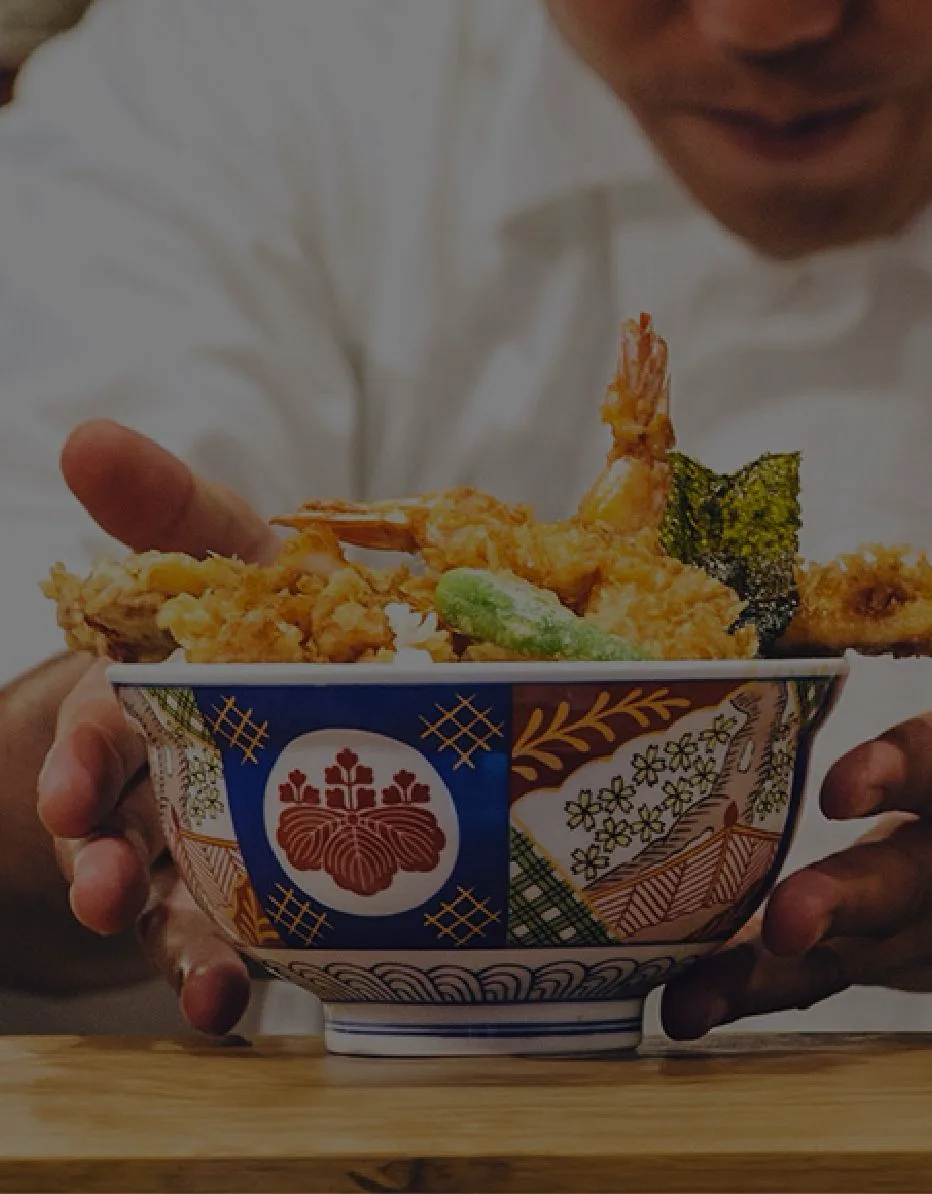
- Tendon, tempura piled over a bowl of rice and finished with a sweet-savory sauce. One complete, satisfying bowl. (We have a whole guide to tendon if you want to go deeper.)
- Tempura soba or udon, tempura served with noodles, hot in broth or cold for dipping. Ask whether the tempura comes on the noodles or on the side, so it stays crisp.
- À la carte pieces, order individual pieces such as shrimp, white fish, squid, and a rotating cast of vegetables, by the piece or in small sets.
- The counter (tempura omakase), you sit at a counter, the chef fries to order, and pieces come to you one at a time, hot from the oil. You usually put yourself in the chef’s hands rather than ordering item by item.
If it is your first time and you want range, a tempura set meal or a counter omakase is the friendliest door. If you want comfort in a bowl, tendon or tempura noodles. [S10]
What to actually order
You do not need to know the whole menu. Two moves cover almost everything.
Ask for an assortment, not just the one thing you recognize. Shrimp is the familiar hello, but the surprises are usually in the vegetables, sweet potato, kabocha squash, eggplant, mushrooms, lotus root, and in white fish and squid. [S12] Try kakiage at least once: it is a fritter of small pieces, often shrimp bits with onion, carrot and other vegetables, fried into one crisp cake.
Then ask one question of your server or the chef: “Which pieces are best right now?” or “How is the tempura served here?” You will get better food, and you will look like someone who cares rather than someone who is lost.
Salt or sauce, you get to choose
Most places give you two ways to season, and trying both is part of the fun. Tentsuyu is a dipping sauce of dashi, soy sauce and mirin, usually with grated daikon to stir in, savory, and good with the heartier pieces. [S10, S08] Salt, plain, or sometimes a flavoured salt like matcha or yuzu, keeps a delicate vegetable or piece of white fish tasting like itself. [S10]
The move: taste a piece with just a little salt first, then try the sauce. Season to notice the ingredient, not to bury it. There is no wrong answer, and no one is grading you.
The one habit that matters most
Eat each piece as soon as it arrives. Tempura’s crisp coating starts softening and taking on oil the moment it leaves the fryer, so at a counter the pieces are timed to be eaten right then, not after the photo, not once the whole course is plated. [S10, S05] Picking up a piece the second it is set down is not rude or greedy; it is exactly what the chef wants. If there is one habit worth adopting, it is eating each piece while it is hot.
Beyond that: dip lightly, use the daikon if it is offered, and do not worry about chopstick choreography. At a counter, follow the pace the chef sets, the pieces will keep coming.
A first-timer’s game plan
- Pick your format, a set meal or the counter if you want variety; a bowl if you want comfort.
- Ask for an assortment, and ask one honest question.
- Try one piece with salt, one with sauce.
- Eat each piece the moment it lands.
- Notice one thing you loved, so you know what to order next time.
That is it. You are not performing expertise, you are just paying attention to genuinely good food. Walk in like you belong, because now you do.
The format and condiment facts here are source-referenced; the ordering and etiquette guidance is our editorial advice, not a review of any named restaurant.