Tempura is a Japanese preparation in which ingredients, often seafood and vegetables, are coated in batter and deep-fried. The coating is batter rather than the breadcrumb crust associated with foods such as katsu. Flour and water form its foundation; egg is common, though formulations vary. [S01, S02]
That definition tells you what it is. The more interesting question is what you notice when you eat it. Does the coating let the ingredient speak, or does every piece taste mostly like crust? You do not need a chef’s vocabulary to have an answer.
Start with the ingredient, not just the shrimp
Shrimp is a familiar introduction, but the menu can extend to white fish, eggplant, mushrooms, squash and other vegetables. Kakiage takes a different shape: smaller ingredients are gathered into a fritter rather than presented as separate large pieces. [S01]
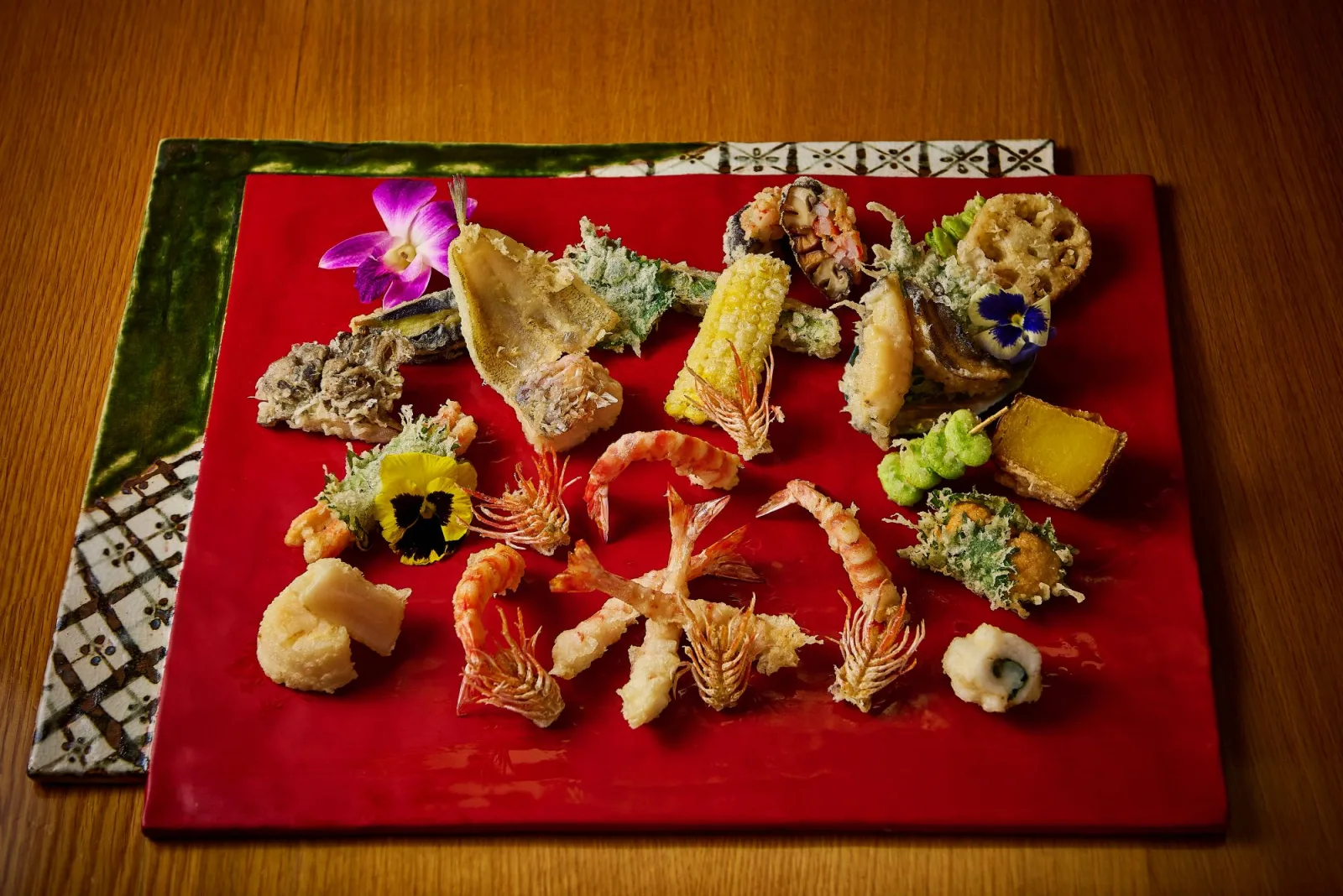
For a first exploration, choose an assortment instead of ordering only the ingredient you already know. Compare two vegetables. Notice whether their centers feel different. Then return to the seafood. The point is not to identify a winner; it is to discover how much variety can live beneath a similar-looking coating.
Choose the meal you want
At a counter, tempura may arrive a piece at a time. A set meal presents it alongside rice and accompaniments. Tendon puts tempura over rice with sauce. Tempura can also accompany soba or udon. Those are different ways of eating, not a ladder from serious to unserious. [S01, S03]
Choose a counter when you want the frying and service to be the focus. Choose a rice bowl when you want a complete bowl to settle into. Choose noodles when that is the meal you are craving. The same ingredient can be interesting in more than one setting.
Ask one useful question
You do not have to study the whole menu before ordering. Ask which vegetables are in the selection, how the tempura is served, or which item best represents that kitchen’s approach.
When salt or dipping sauce is offered, try a small amount before deciding how much you want. Tentsuyu commonly combines dashi, soy sauce and mirin. It is a seasoning to explore, not an obligation to make every bite taste identical. [S03]
Make your next meal a small experiment
Pick one thing to notice: the vegetable inside, the texture of the coating, or the difference between a plain bite and a seasoned one. That is enough. You do not need to score the meal or perform expertise at the table.
Our guide separates dedicated tempura specialists from broader restaurants with a meaningful tempura offering. Use those descriptions to choose the experience that suits you, rather than assuming every listing serves the same kind of meal.
Source references support the factual explanations. The tasting prompts and editorial framing are our proposed approach, not attributed quotations or claims of firsthand testing.